PROJECTS

Bottom Brook

Overview

Bottom Brook is a rare earth element exploration project in western Newfoundland, where Sorrento completed ten drill holes at the U3 Prospect in 2026.

The project comprises 16 mineral licences totalling approximately 15,150 hectares, about 40 km south of Corner Brook. Secondary roads provide access from the adjacent Trans-Canada Highway.

Sorrento holds an option to earn up to a 100% interest in Bottom Brook.

Bottom Brook location and mineral claims south of Corner Brook
Bottom Brook project location and access in western Newfoundland.

2026 Drilling

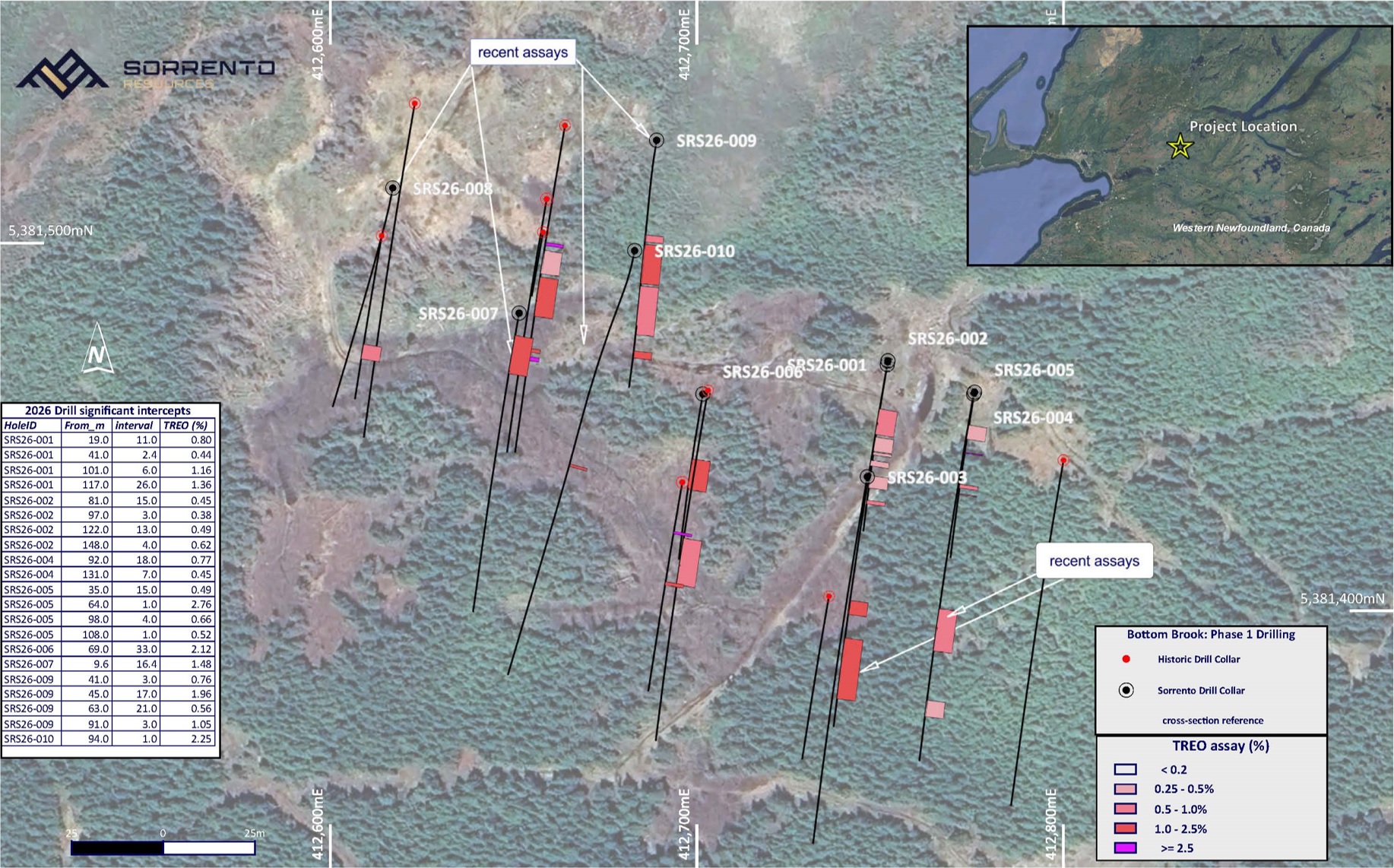
Drilling at U3 returned broad, near-surface intervals of total rare earth oxides (TREO). The plan below places Sorrento’s 2026 holes alongside the historical drilling.

Select any map or section to enlarge it.

Plan of historical Ucore and Sorrento 2026 drill holes at Bottom Brook
U3 drill plan showing historical Ucore holes and Sorrento’s 2026 drilling, from the July 7, 2026 release.

SRS26-009

52 m at 0.98% TREO

From 42 m downhole.

SRS26-006

33 m at 2.12% TREO

From 69 m downhole.

SRS26-007

16 m at 1.51% TREO

From 10 m downhole.

Intervals are reported as core lengths. True widths are estimated at approximately 70–90% of core length. Results are preliminary and insufficient to define a mineral resource.

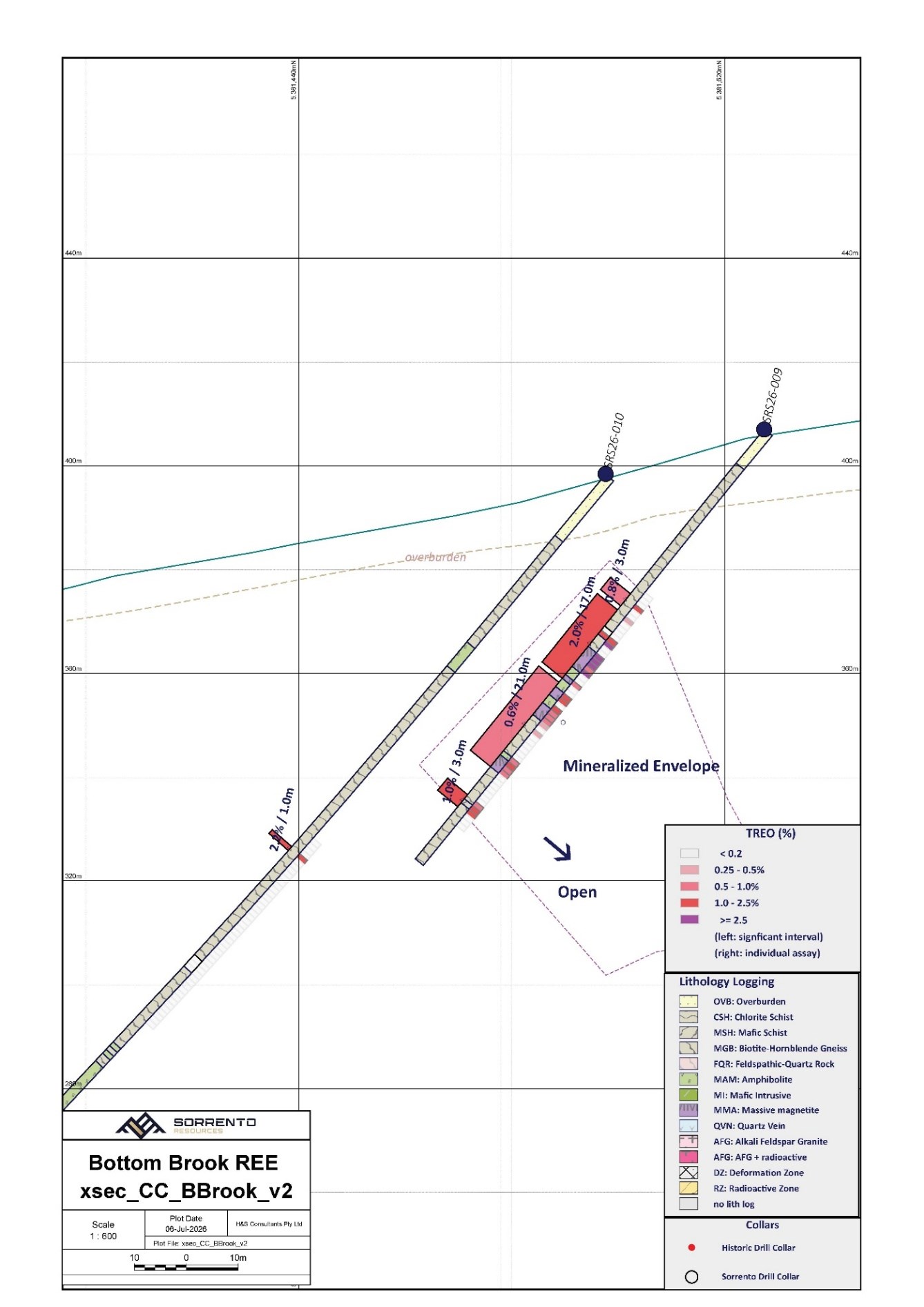
Cross-section through Bottom Brook holes SRS26-009 and SRS26-010
Cross-section through SRS26-009 and SRS26-010, showing the position of the reported mineralized intervals. Intervals are core lengths; estimated true widths are approximately 70–90% of core length.

Geology & Mineralogy

The Steel Mountain setting

Bottom Brook lies in the Steel Mountain Subzone of the Humber Zone, where Proterozoic metamorphic rocks are intruded by the Hare Hill granite complex.

In 2026, drilling identified REE mineralization in massive to semi-massive magnetite hosted by amphibolite, alkali-granite and quartz-feldspathic igneous rocks.

The mineralization is dominated by REE-rich monazite, with lesser zircon, allanite, apatite and trace cerium carbonates.

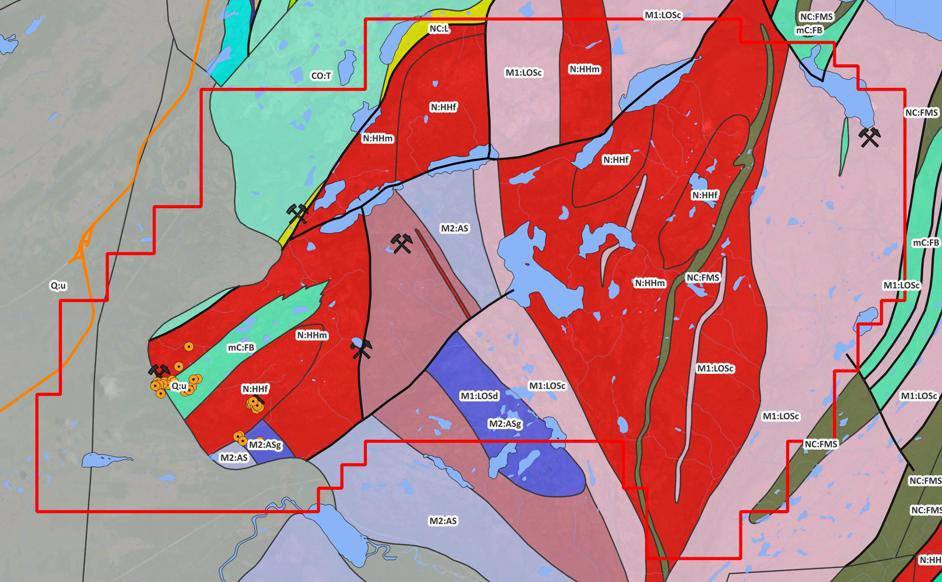
Regional geology of Bottom Brook and the Hare Hill granite complex
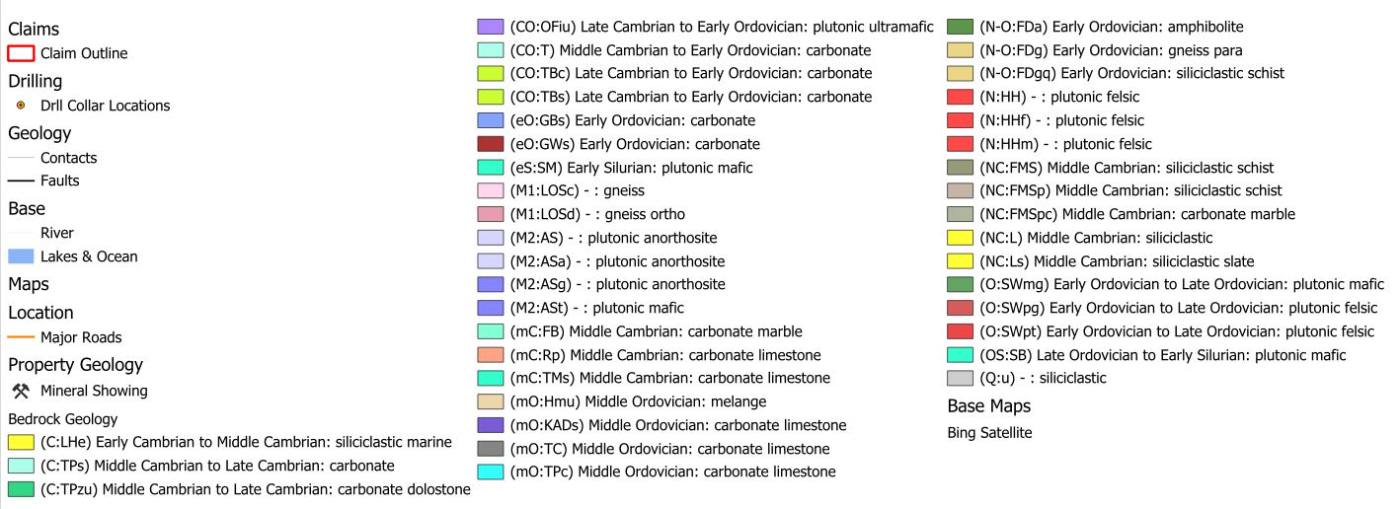
Regional geology of Bottom Brook and the Hare Hill granite complex — legend
Regional geology provides the setting for Bottom Brook’s rare earth mineralization. Geological units are identified in the accompanying legend.
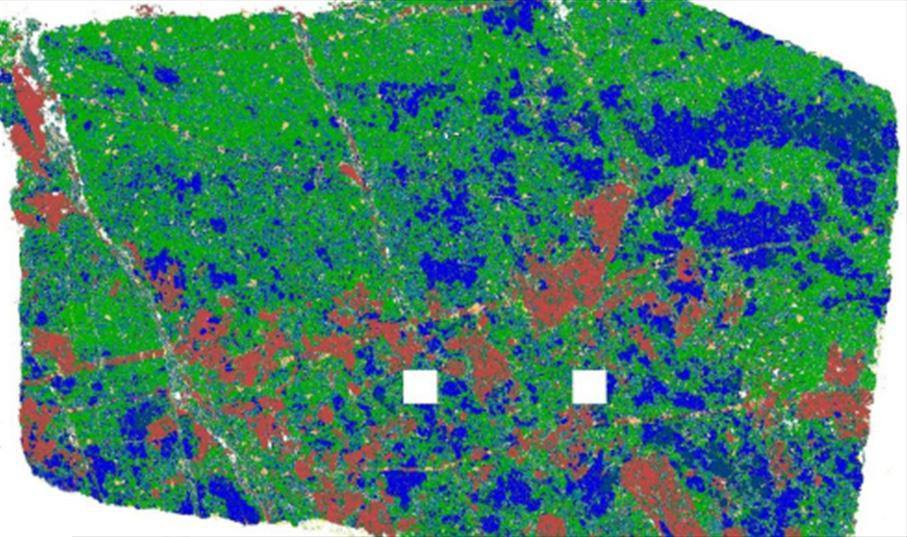
False-colour SEM-MLA image of Bottom Brook mineral grains
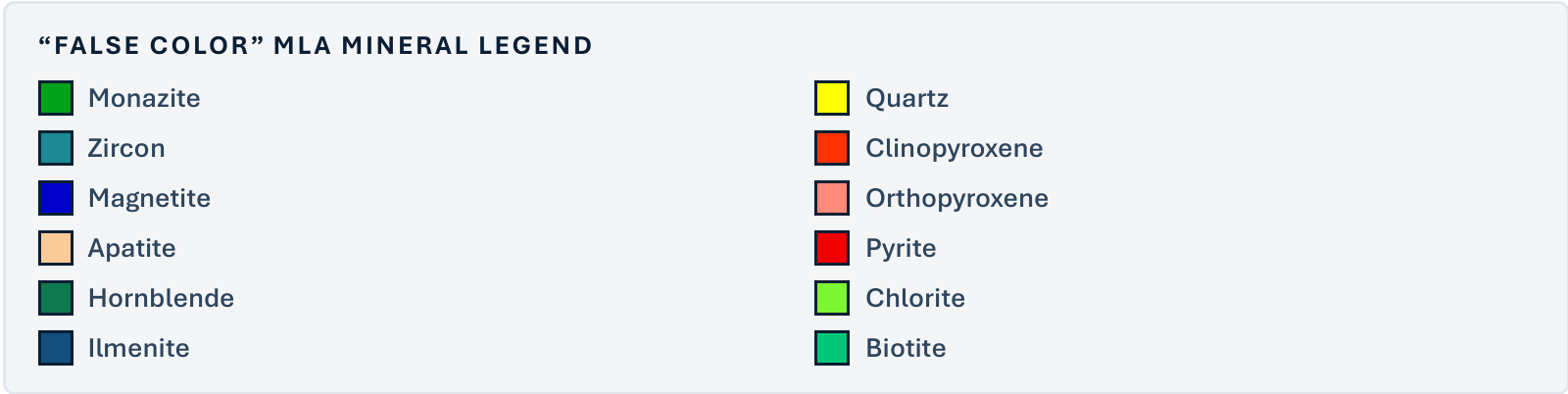
False-colour SEM-MLA image of Bottom Brook mineral grains — legend
SEM-MLA mineral image and source legend from the 2023 mineralogical work. Colours distinguish the identified mineral phases.

Understanding the REE-bearing minerals

Scanning electron microscopy and mineral liberation analysis (SEM-MLA) was carried out in 2023 by Terra Rosetta Inc. (Dr. Derek Wilton) on several field samples.

The work identified monazite as an important REE host. This mineralogical information supports the next stage of metallurgical investigation into recovery characteristics.

View the SEM-MLA sample data

Values below are area percentages measured in thin section, rather than chemical assay grades. Sample G4 returned 35.98 area % total REE and 31.85 area % monazite.

Sample Total REE (area %) Monazite (area %)
G435.9831.85
REE-118.8616.45
Q26.835.69
Q45.583.32
Q34.193.36
Q1(2)3.791.99
TR-43.521.24
Q12.191.23
TR-21.980.31
TR-31.820.32
TR-11.270.25
TR-50.620.08

Exploration Targets

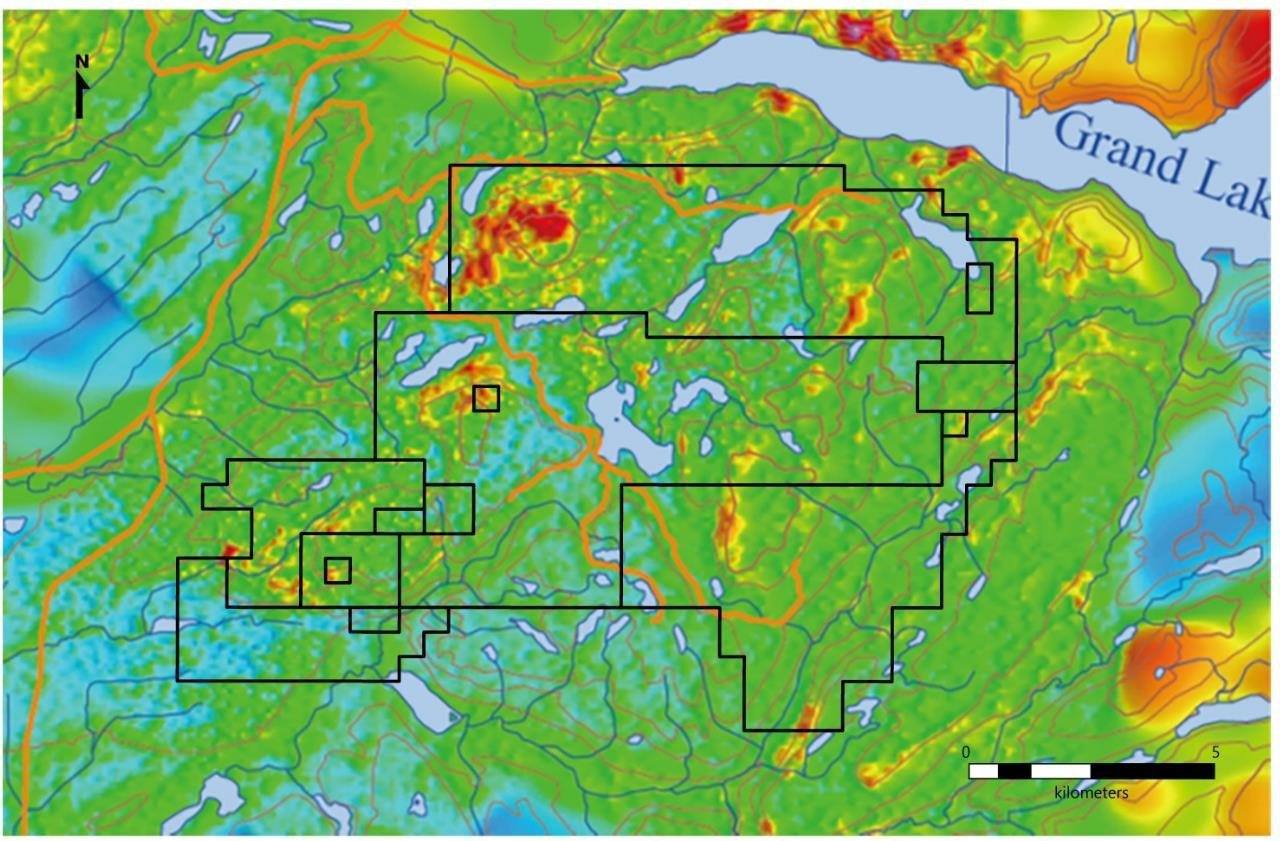
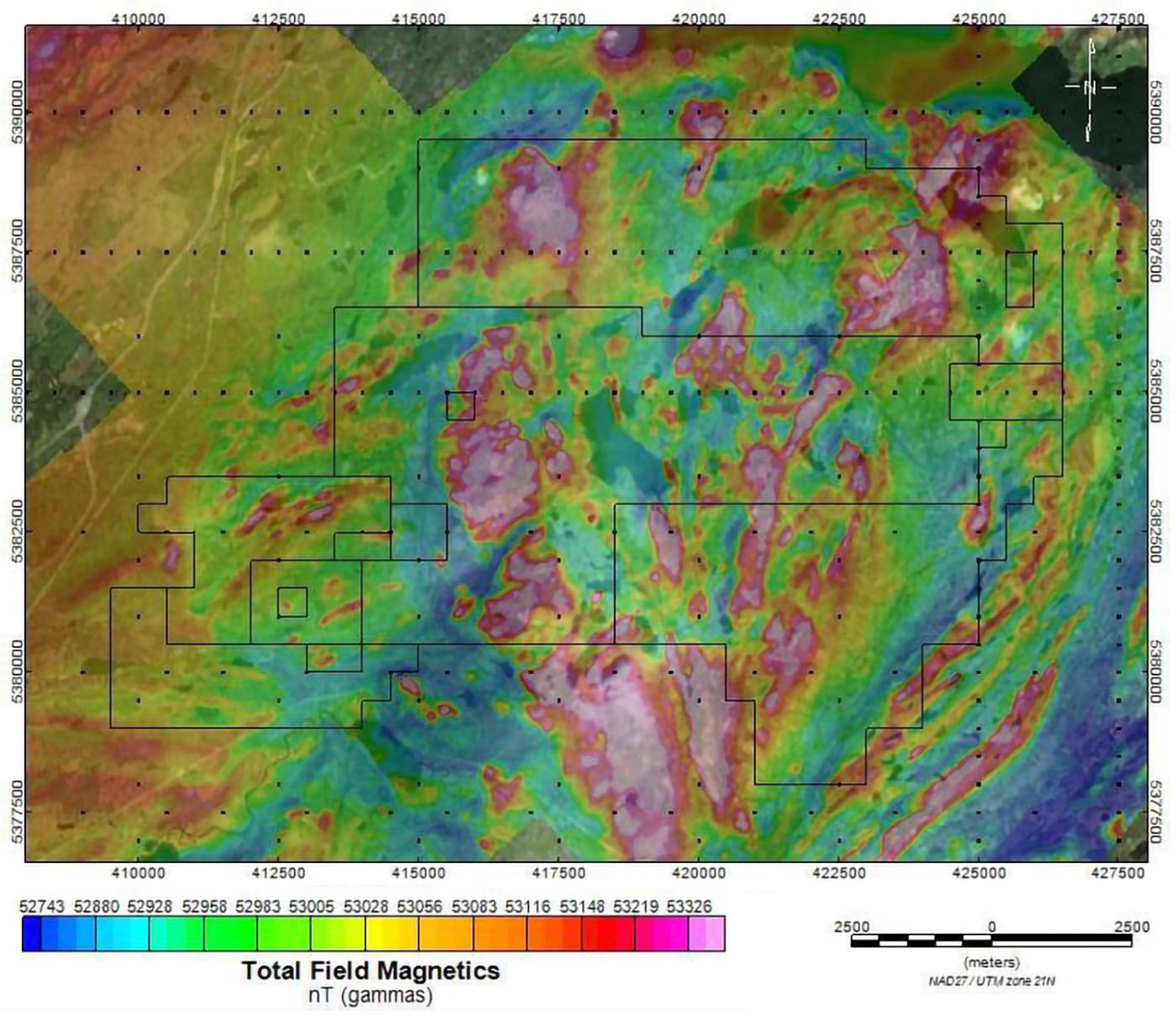
Surface sampling and regional geophysics provide context for exploration beyond U3. The equivalent-thorium and magnetic maps show responses associated with the Hare Hill granite complex and surrounding rocks.

Airborne equivalent-thorium survey map at Bottom Brook
Equivalent-thorium survey map, compiled by Oneschuk and Kilfoil (2021). High thorium responses are associated with the Hare Hill granite complex.
Total-field magnetic survey map at Bottom Brook
Total-field magnetics, derived from Fitzgerald and Smith (2007). Anomalous magnetic intensities correlate with the Hare Hill granite complex and 1,500 Ma granulites.

Prospect 1

Altered granite with rusty veins, approximately 1.75 km northeast of U3. A grab sample assayed 2.87% TREO.

Prospect 2

A rusty pegmatite vein in altered, biotite-rich granite, 875 m northeast of U3. Grab samples returned 5.21% and 6.54% TREO.

Prospect 3

Hematite-rich granite with magnetite. Samples from the east and west showings returned 4.78% and 4.89% TREO, respectively.

Grab samples are selective and may not represent overall mineralization. Geophysical responses are exploration indicators, not assay grades.

Project History

1980–1982
Shell identifies uranium-bearing boulders.
2006–2007
Ucore identifies bedrock mineralization, completes radiometric and magnetic surveying, and drills three holes at Bottom Brook A.
2008–2010
Monroe Minerals drills nine additional holes in 2008; Kirrin Resources follows with four holes in 2010.
2023
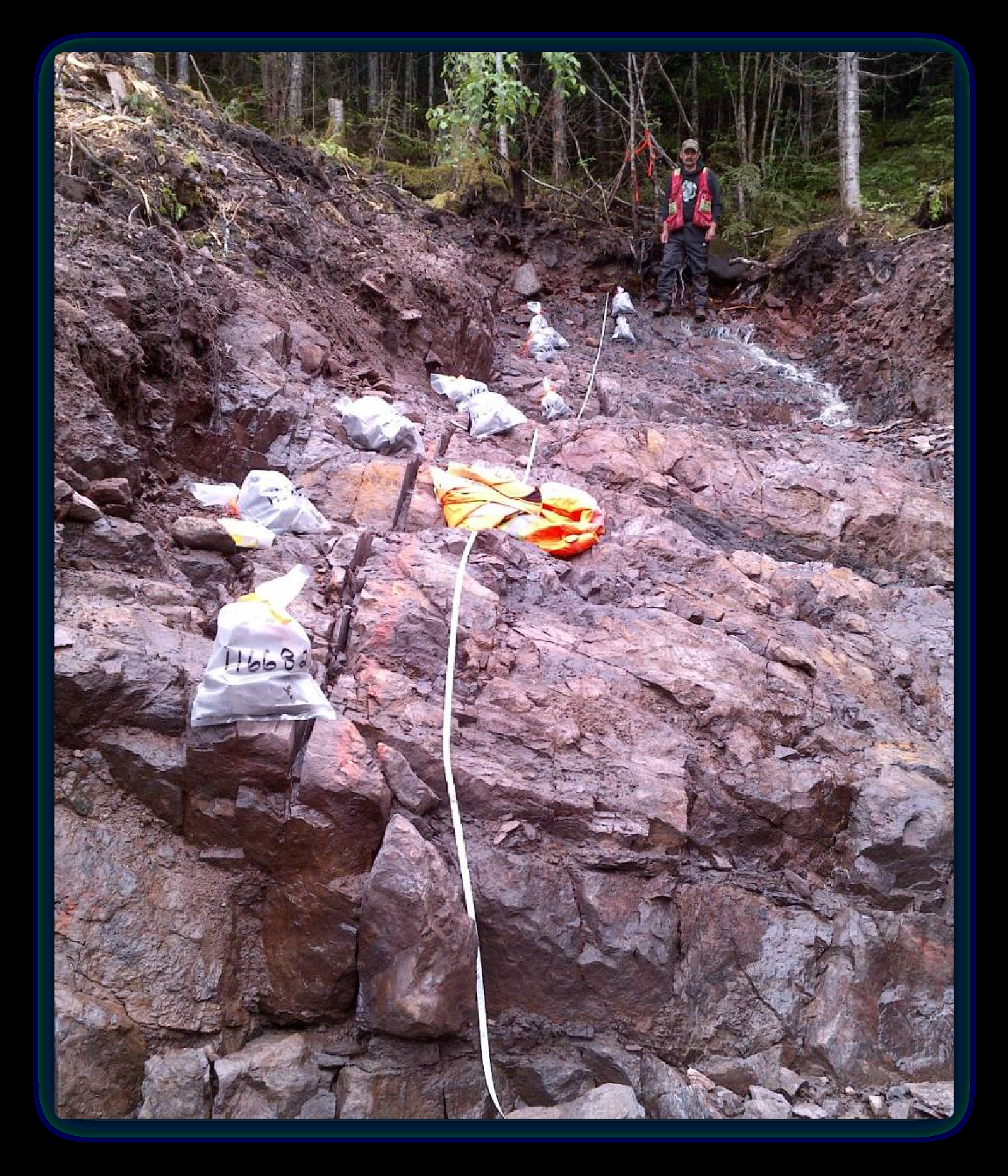
York Harbour Metals acquires the project and completes trenching, channel sampling and mineralogical analysis, along with 1,701 m of drilling in ten holes. Seventeen channel samples total 16.9 m across two trenches.
2026
Sorrento completes ten diamond drill holes at U3 and reports broad TREO intervals.
Trench and channel-sampling work at Bottom Brook in 2023
Channel-sampling work at Bottom Brook in 2023, during York Harbour Metals’ exploration program.

Next Steps

Metallurgical test work

In its July 7, 2026 release, Sorrento identified planned metallurgical test work as the next step to assess mineral recovery characteristics following the completed drill program.

Join Our Mailing List

Sign up to receive updates on our latest news and events. Your email will never be shared or sold and you can opt out at any time.

No, I don't want to receive updates

Thank you for subscribing!

We'll send you updates on our latest news and events.

Close